
manual garage door lock kit
Manual Garage Door Lock Kit: A Comprehensive Guide
Understanding garage door security is crucial for homeowners, and a manual lock kit offers an added layer of protection against unauthorized access.
These kits provide a simple, cost-effective way to secure your garage, especially when the automatic opener isn’t sufficient or fails.
This guide details installation, compatibility, and maintenance, covering various door types and potential issues, ensuring peace of mind for your property.

Consider future expansion plans when choosing a lock, as building codes differentiate between private and public garages based on square footage (under 1,000 sq ft).
What is a Manual Garage Door Lock Kit?
A manual garage door lock kit is a supplemental security measure designed to physically secure your garage door, independent of the automatic opener. These kits typically consist of a locking mechanism – such as a slide bolt, keyed cylinder, or deadbolt – along with the necessary mounting hardware like screws and sometimes, reinforcing plates.
Unlike electronic systems, manual locks offer a straightforward, non-electronic method of preventing unauthorized entry. They are particularly useful as a backup in case of power outages, opener malfunctions, or as a deterrent against forced entry.
Essentially, they add a physical barrier, making it significantly harder for someone to lift or breach the garage door. These kits are adaptable to various garage door types, including sectional, roll-up, and single-panel doors, offering a versatile security solution for homeowners seeking enhanced protection.
Benefits of Installing a Manual Lock
Installing a manual garage door lock kit provides a significant boost to your home’s security profile. It acts as a crucial secondary layer of defense, safeguarding against break-ins even if the automatic opener is compromised or fails due to power outages.
Manual locks offer peace of mind, knowing your belongings are protected by a physical barrier. They are a cost-effective security upgrade, often much cheaper than replacing or repairing an automatic opener.
Furthermore, these locks can be particularly valuable in areas with higher crime rates or for garages containing valuable items. They also address concerns related to the vulnerability of solely relying on electronic systems, offering a reliable, non-electronic security solution for enhanced protection and control.
Types of Manual Garage Door Lock Kits
Several types of manual garage door lock kits cater to different security needs and garage door configurations. Slide bolt locks are a common, affordable option, engaging directly into the door’s track or frame for simple, yet effective, security.

Keyed cylinder locks offer more controlled access, requiring a key to operate, providing a higher level of security. Deadbolt locks represent the most robust option, featuring a strong bolt that extends deep into the door frame, resisting forced entry.
The choice depends on your budget, desired security level, and the specific construction of your garage door. Consider the ease of installation and the strength of the locking mechanism when selecting the appropriate kit for your needs.
Slide Bolt Locks
Slide bolt locks are a popular choice for manual garage door security due to their simplicity and affordability. These locks typically feature a metal bolt that slides horizontally, engaging with a vertical groove or a pre-punched hole in the door frame.
Installation is generally straightforward, often requiring only a drill and screwdriver. Align the slide lock with the bolt engaged into the vertical groove or punched hole, then secure it with self-drilling hex screws above and below the lock’s base.

While offering a basic level of security, slide bolt locks are effective at deterring casual intruders. Ensure the door stile and frame are compatible for a secure fit, and consider reinforcing the surrounding wood for added strength.
Keyed Cylinder Locks
Keyed cylinder locks provide a higher level of security compared to slide bolt locks, as they require a key for operation. These locks function similarly to standard door locks, utilizing a cylinder mechanism with pins that must be aligned by the correct key to unlock.
Installation typically involves drilling a hole through the garage door to accommodate the lock’s cylinder. Secure the lock body with screws, ensuring a tight fit to prevent tampering. Consider the quality of the cylinder; higher-quality cylinders are more resistant to picking.
Keyed cylinder locks offer convenient access for authorized individuals while deterring unauthorized entry. Regularly check the keyway for debris and lubricate the cylinder for smooth operation.

Deadbolt Locks

Deadbolt locks represent a robust security solution for garage doors, offering significant resistance to forced entry. Unlike keyed cylinder locks, deadbolts utilize a solid metal bolt that extends deep into the door frame, making them harder to bypass.
Installation requires precise drilling to accommodate the deadbolt mechanism and backset. Ensure the strike plate is securely mounted on the door frame, reinforced if necessary, to withstand significant force. Choose a deadbolt with a hardened steel bolt for maximum protection.

Deadbolts provide a visual deterrent and a strong physical barrier against intruders. Regularly test the bolt’s operation and inspect the strike plate for damage. Consider combining a deadbolt with another lock type for enhanced security.
Tools Required for Installation
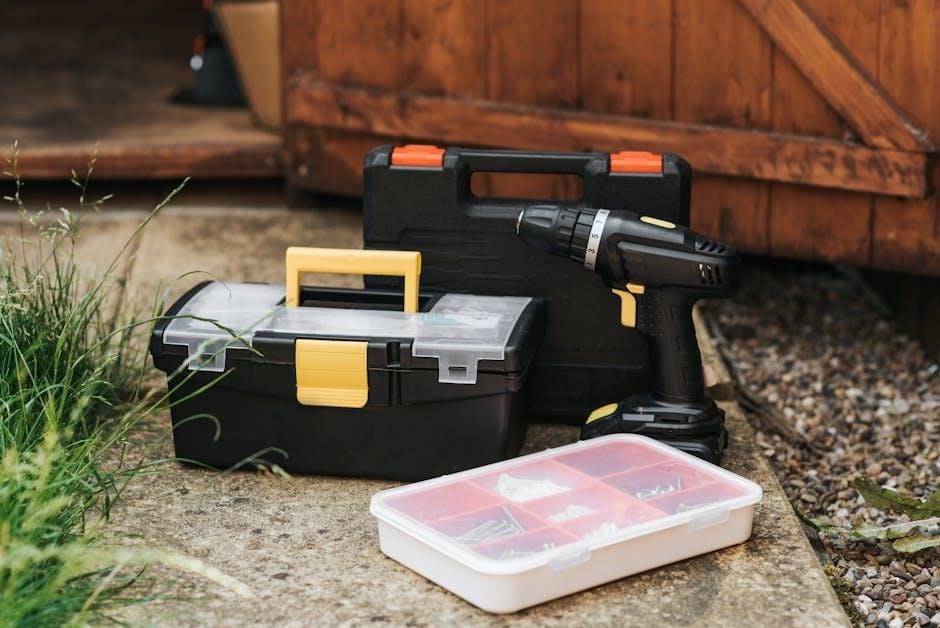
Successful manual garage door lock kit installation demands specific tools for precision and safety. A power drill with various drill bit sizes is essential for creating pilot holes and securing screws. A screwdriver set, including Phillips and flathead, is needed for tightening fasteners.
A measuring tape ensures accurate lock placement, while a pencil marks drilling locations. Safety glasses are crucial to protect your eyes from debris. Self-drilling hex screws, often included in kits, simplify attachment. A level guarantees proper lock alignment.
For reinforcing the strike plate, a hammer and potentially wood screws or longer, heavier-duty screws may be required. Consider a stud finder to locate framing members for secure mounting. Always prioritize using quality tools for a reliable installation.
Safety Precautions Before You Begin
Prioritizing safety is paramount before installing a manual garage door lock kit. Always wear safety glasses to protect your eyes from flying debris during drilling and screwing. Disconnect the garage door opener to prevent accidental operation while working. Ensure the door is securely supported in the open position, potentially using clamps or a helper.
Inspect the garage door for any existing damage or weaknesses before starting. Be mindful of spring tension; avoid any work involving the springs themselves unless you are a qualified professional. Read and understand all instructions included with the lock kit.
Work in a well-lit area and keep children and pets away from the work zone. If unsure about any step, consult a qualified handyman or garage door technician.
Step-by-Step Installation Guide
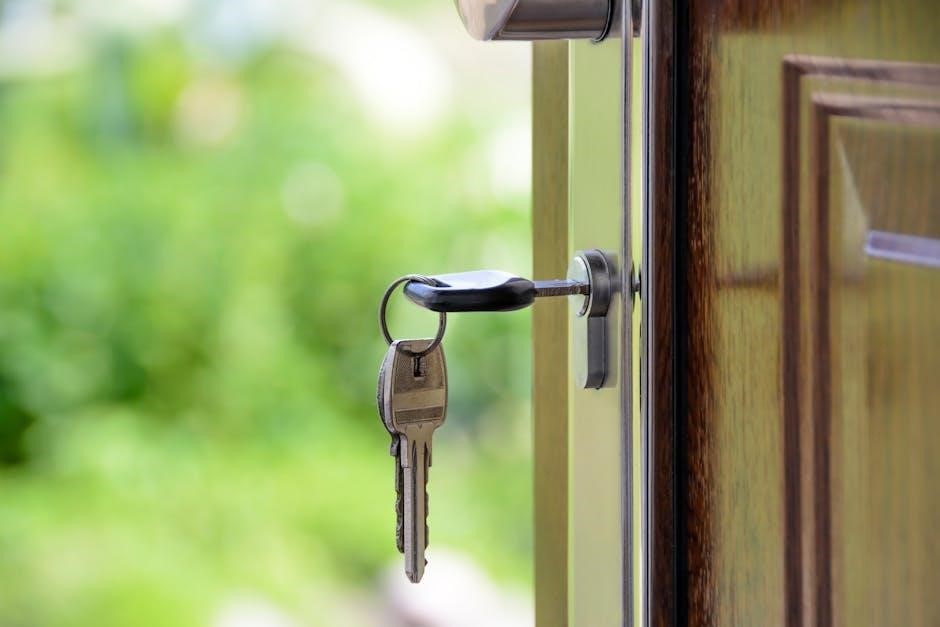
Begin by carefully preparing the garage door surface where the lock will be mounted, ensuring it’s clean and free of obstructions. Position the lock mechanism according to the manufacturer’s instructions, typically on the door’s vertical stiles. Mark the screw holes precisely using a pencil or marker.
Pre-drill pilot holes to prevent wood splitting, especially with harder door materials. Align the lock with the pre-drilled holes and secure it with the provided screws, tightening them firmly but avoiding over-tightening. Test the lock’s functionality by engaging and disengaging it several times.
Double-check all screws for tightness and ensure smooth operation of the locking mechanism.
Preparing the Garage Door
Before installation, thoroughly inspect your garage door to determine the optimal lock placement. Clean the chosen area with a degreaser to remove dirt, grime, and any existing residue, ensuring proper adhesion. Identify the vertical stiles – these are the strongest points for mounting the lock mechanism.
Measure carefully to ensure the lock is positioned at a convenient height and doesn’t interfere with the door’s operation. Mark the screw locations with a pencil, using the lock’s mounting plate as a guide. Pre-drilling pilot holes is crucial, especially for metal or hardwood doors, to prevent splitting or damage.
Confirm adequate space around the lock for easy operation and avoid obstructions.
Installing the Lock Mechanism
Carefully align the lock mechanism with the pre-drilled pilot holes on the garage door stile. Insert the mounting screws, ensuring they are the correct type and length for your door material. Avoid over-tightening initially; leave a small gap for adjustments.
For slide bolt locks, ensure the bolt smoothly engages with the receiving bracket or hole on the opposite door panel. Keyed cylinder or deadbolt locks require precise alignment for proper key operation. Test the lock’s functionality at this stage, verifying smooth movement and secure engagement.
Make any necessary adjustments by slightly loosening and repositioning the lock before fully tightening the screws.
Securing the Lock with Screws
Once the lock mechanism is aligned and tested for smooth operation, proceed with securely fastening it to the garage door. Utilize self-drilling hex screws, appropriate for the door’s material – steel, wood, or aluminum – to ensure a robust hold.
Install screws both above and below the base of the lock, distributing the pressure evenly. Avoid using excessive force when tightening, as this could strip the screw holes or damage the door. Ensure the screws are flush with the lock’s surface to prevent snagging.
Double-check the tightness of all screws after installation, periodically re-tightening as needed to maintain security.
Compatibility with Different Garage Door Types
Manual lock kits demonstrate versatility, adapting to various garage door designs, though installation nuances exist. Sectional doors, common in residential settings, generally offer straightforward compatibility, utilizing the flat surface for secure mounting.
Roll-up doors, often found in commercial spaces, may require specific bracket adaptations due to their curved structure; ensure the kit includes appropriate hardware. Single-panel doors, swinging outwards, present a unique challenge, demanding locks designed for this motion and door material.
Always verify the kit’s specifications regarding door type compatibility before purchase. Consider the door’s material (steel, wood, aluminum) and thickness to select screws of the correct length and gauge for a secure fit.
Sectional Doors
Sectional doors are highly compatible with most manual lock kits due to their flat panel construction, simplifying the installation process. The broad surface area provides ample space for mounting slide bolt, keyed cylinder, or deadbolt locks securely.
Installation typically involves aligning the lock mechanism with the door’s vertical track or stile and fastening it with self-drilling screws. Ensure screws penetrate sufficiently into the door’s structure for a robust hold, avoiding over-tightening which could damage the panels.
Consider the door’s insulation; longer screws may be needed to bypass the insulation layer and reach the solid door material. Regularly check screw tightness to maintain optimal security, as vibrations can loosen them over time.
Roll-Up Doors
Roll-up doors present unique challenges for manual lock kit installation due to their curved shape and limited flat surfaces. Securing a lock effectively requires careful consideration of the door’s material and construction.
Slide bolt locks are often preferred for roll-up doors, as they can be mounted to the door’s slats or the guide rails. Keyed cylinder or deadbolt locks may require additional reinforcement to ensure a secure fit, potentially involving metal plates or brackets.
Prioritize using self-drilling screws designed for metal to prevent damage to the door’s slats. Regularly inspect the lock and mounting hardware for signs of wear or loosening, especially given the door’s constant movement.
Single-Panel Doors
Single-panel garage doors, often found in older homes or sheds, generally offer the simplest installation process for manual lock kits. The flat surface of the door provides ample space for mounting various lock types, including slide bolt, keyed cylinder, and deadbolt locks.
Reinforcing the area around the lock is still recommended, particularly if the door is constructed from thinner materials like wood. Utilize longer screws that penetrate deeper into the door’s frame for enhanced security.
Consider the door’s material – stucco requires specific screw types – and ensure the lock mechanism aligns properly with the door frame. Regularly check the lock’s functionality and tighten screws as needed to maintain optimal security.
Troubleshooting Common Installation Issues

Misalignment is a frequent problem during manual lock kit installation; ensure the lock mechanism aligns perfectly with the receiving bracket or hole in the door frame. Stripped screw holes can occur, especially in older or softer wood doors – use wood filler and shorter screws for a secure hold.
Difficulty engaging the lock might indicate a warped door or frame; adjust the strike plate or consider shimming the lock for a tighter fit. If the lock feels loose, double-check screw tightness and consider using lock washers.
Remember to test the lock repeatedly after installation, simulating forced entry to identify any weaknesses. Always prioritize safety and consult a professional if you encounter persistent issues.
Maintaining Your Manual Garage Door Lock
Regular lubrication is key to smooth operation; apply a silicone-based lubricant to the lock mechanism and moving parts every six months. Inspect the lock for signs of corrosion or wear, particularly if you live in a humid or coastal environment.
Check screw tightness quarterly, as vibrations can loosen them over time. Clean the lock with a mild detergent and water to remove dirt and debris. Test the lock’s functionality monthly, ensuring it engages and disengages easily.
Consider the garage’s environment; HVAC systems can introduce moisture, potentially affecting the lock. Address any issues promptly to prevent further damage and maintain security.
Garage Door Size and Lock Requirements (Under 1,000 sq ft)
For garages under 1,000 square feet, often classified as “private garages,” basic manual lock kits typically suffice. A slide bolt or keyed cylinder lock provides adequate security for standard single-car garages. However, consider the garage’s use; storage of valuable items may necessitate a more robust deadbolt lock.
Local building codes may dictate specific lock requirements, even for private garages. Ensure the lock is compatible with your garage door type – sectional, roll-up, or single-panel – for proper installation. Larger doors or those with pedestrian access might benefit from dual locking mechanisms.
Future plans for garage expansion should influence your lock choice; a more substantial lock now avoids future upgrades.
Building Codes and Private vs. Public Garages
Building codes significantly impact garage door security requirements, differentiating between “private” and “public” garages. Garages exceeding 1,000 square feet are generally classified as public, demanding stricter security measures, potentially including fire-rated doors and more robust locking systems.
Private garages, typically those under 1,000 sq ft, often have less stringent regulations, but local ordinances still apply. Manual lock kits must meet basic safety standards, ensuring they don’t impede emergency egress. Residential codes prioritize safety, while commercial codes emphasize security.
Understanding this distinction is crucial for compliant installation. Always check local building codes before installing any lock, especially if the garage has a residential component or potential for future commercial use;
HVAC Systems in Garages: Considerations
Integrating HVAC systems into garages introduces unique security considerations when installing a manual garage door lock kit. Direct vent furnaces, while convenient, can create vulnerabilities if not properly secured. A compromised garage door could expose the HVAC unit to tampering or theft, potentially affecting the entire home’s heating or cooling.
Ensure the lock kit doesn’t obstruct access needed for HVAC maintenance or repairs. Consider the system’s air intake and exhaust; a locked garage shouldn’t impede proper ventilation. Local codes may require specific clearances around HVAC equipment, impacting lock placement.
Prioritize a robust locking mechanism if the garage houses critical HVAC components, enhancing overall home security.
Future Expansion Plans and Garage Structure
Planning for future garage expansions significantly impacts lock kit selection. If a second story addition is anticipated, the garage may eventually be classified as a public space, triggering stricter building code requirements. A lock suitable for a private garage (under 1,000 sq ft) might not meet standards for a larger, public-access structure.
Consider the garage’s structural integrity. Adding a second story necessitates a foundation capable of supporting the increased load. A reinforced garage may require heavier-duty lock mounting hardware. Ensure the chosen lock kit is compatible with the existing and planned garage construction materials (stucco, wood, etc.).
Proactive planning avoids costly lock replacements during future renovations.
Pedestrian Door Integration with Garage Door
Integrating a pedestrian door into a garage structure presents unique security considerations alongside a manual lock kit. If the pedestrian door isn’t the primary egress, its size (e.g., 24×75 inches) must comply with local building codes. A robust locking system for both the garage door and pedestrian door is essential for comprehensive security.
Consider a coordinated locking strategy. The manual lock kit should complement the pedestrian door’s locking mechanism, creating a unified security perimeter. Evaluate the potential for forced entry through either door and select locks accordingly. Reinforced door frames and heavy-duty strike plates are recommended.
Proper integration enhances overall garage security and convenience.
Wayne Dalton Spring Installation Tools
While a manual garage door lock kit focuses on security, understanding garage door mechanics is beneficial, especially concerning spring systems. Wayne Dalton’s TorqueMaster Plus Winding Tool is a professional-grade tool designed for safe and efficient spring replacement; However, spring work is inherently dangerous and should ideally be performed by trained technicians.
Incorrect spring installation can lead to serious injury or door malfunction, potentially compromising the security a lock kit provides. The TorqueMaster tool simplifies winding and unwinding, reducing the risk of accidental release. Always follow Wayne Dalton’s instructions meticulously when using such tools.
Prioritize safety; a secure door relies on properly functioning components.
Commercial Garage Door Roller Bracket Upgrades
Although a manual lock kit enhances security, the overall durability of your garage door system impacts its effectiveness. Upgrading commercial garage door roller brackets, particularly to adjustable types, can significantly improve performance and longevity. These brackets offer greater flexibility in aligning rollers, reducing wear and tear on the door and tracks.
A well-maintained door is harder to force open, complementing the security provided by a manual lock. Adjustable brackets allow for fine-tuning, ensuring smooth operation and minimizing stress on the locking mechanism. Consider this upgrade if you notice uneven door movement or excessive noise.
Proactive maintenance strengthens your security, alongside a robust lock kit.